Why Your Dryer Outlet Isn’t 220 Volts
Dryer not getting 220–240 volts? Learn why your outlet may be miswired or undersized, warning signs to watch for, and how a licensed electrician can fix it safely.
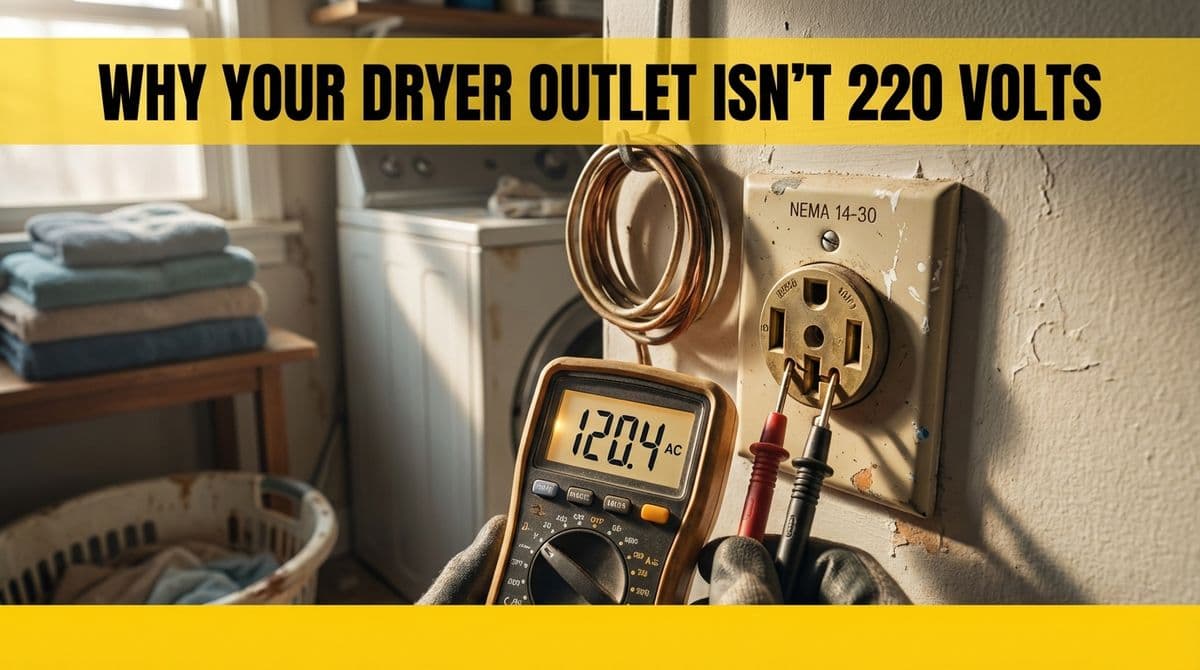
When Your Dryer Outlet Isn’t Really 220 Volts
We recently got a call from a customer — let’s call him Brian — from out near Livonia. Brian had just tried to hook up a newer electric dryer, and it kept shutting off. He put a meter on the receptacle and said, “This outlet’s supposed to be 220 volts, but I’m not getting that. What’s going on?”
That kind of question is more common than many folks realize. Between different breaker sizes, wire types, and changes in electrical code over the years, dryer outlets can be confusing — and when the voltage or amperage isn’t right, it can be unsafe.
We thought we’d walk through the same things we usually explain on calls like Brian’s: why your dryer outlet might not be giving you the 220–240 volts you’re expecting, what that really means, and what a licensed electrician can safely do to fix it.
First Thing: Is It Really Supposed to Be 220 Volts?
When homeowners say “220 volts,” they’re usually talking about what we call a 240-volt branch circuit. In most modern homes, electric dryers are designed for about 240 volts, give or take. Older folks just grew up calling it “220.”
In a typical setup, your dryer outlet should be on its own dedicated circuit with:
- 240 volts (two hot wires and a neutral/ground, depending on the receptacle type)
- 30-amp breaker for most standard electric dryers
- Properly sized wire — usually 10-gauge copper for a 30-amp dryer circuit
If any one of these pieces is wrong — voltage, breaker size, or wire size — you can end up with a dryer that doesn’t work properly or, worse, a fire hazard in the wall.
Why Your Dryer Outlet Might Not Be Getting Full Voltage
When we go out to a home like Brian’s and test a dryer receptacle, there are a handful of issues we run into over and over. Here are a few of the big ones.
1. Miswired or Loose Connections
Sometimes a previous homeowner or handyman “helped” by replacing a receptacle or breaker without really understanding 240-volt circuits. We see:
- Only one hot leg connected, giving you around 120 volts instead of 240
- Loose terminations on the receptacle or in the panel
- Neutral and ground mixed up or tied together where they shouldn’t be
Loose connections can cause voltage drop, overheating, and arcing — all of which are fire risks. One of the first things we do on a service call is open the panel and outlet box to visually and electrically check every connection.
2. Wrong Breaker or Wire Size
Not every “dryer” circuit is actually wired for a modern full-sized dryer. We occasionally find:
- A 20-amp breaker feeding a receptacle that’s being used for a 30-amp dryer
- Undersized wire (for example, 12-gauge on a 30-amp breaker)
- Multiple outlets sharing what should be a dedicated dryer circuit
Even if you see 240 volts when you test, having the wrong breaker or wire means the circuit may not safely handle the dryer’s load. Codes exist to make sure the wiring, breaker, and receptacle all work together.
3. Older 3-Prong Outlet With Newer 4-Prong Dryer
Homes wired decades ago often have 3-prong dryer outlets (two hots and a neutral, with the neutral bonded to the frame). Newer dryers are designed for 4-prong outlets that separate neutral and ground for safety.
In those cases, we sometimes find homeowners have used unofficial adapters or “creative” wiring methods to make things fit. That can lead to odd voltage readings, nuisance tripping, or shock hazards at the dryer chassis.
Warning Signs Before the Outlet Fails
Before you ever grab a meter and check voltage, your home may already be trying to tell you something is wrong. We encourage customers to call us if they notice:
- Burning or hot plastic smell near the outlet or behind the dryer
- Outlet cover that’s warm (or downright hot) to the touch during or after a cycle
- Frequent breaker trips when the dryer runs
- Dryer randomly shutting off or struggling to start
- Visible discoloration around the outlet or plug blades
Those are all clues that the wiring, connections, or breaker may be stressed. Even if the outlet still “kind of works,” it’s worth having us inspect it before it turns into a bigger problem.
What We Do When We Inspect a Dryer Outlet
When we go out on a call like Brian’s, we follow a pretty consistent process to track down the issue safely and quickly:
- Verify the circuit at the panel. We check the breaker size, type, and labeling, and confirm that it’s feeding only the dryer.
- Test voltage at the receptacle. We measure hot-to-hot (should be about 240V), and hot-to-neutral and hot-to-ground (each should be around 120V).
- Inspect the wiring. We open the box and the panel, checking wire size, condition, and all terminations.
- Check for code compliance. We confirm the outlet type (3-prong vs 4-prong), bonding, and grounding match current safety standards for that installation.
- Test the dryer itself. If the outlet checks out, we’ll also look at the dryer cord, connections, and any internal issues that might mimic a power problem.
Once we know exactly what’s wrong, we can give you clear options and pricing before any repair work starts.
Common Repairs a Licensed Electrician Can Make
Depending on what we find, fixing a dryer outlet that’s not at the proper voltage can involve one or more of the following:
- Re-terminating or tightening connections at the panel and receptacle
- Replacing the breaker with the correct type and size
- Upgrading the receptacle (for example, 3-prong to 4-prong where appropriate)
- Running a new dedicated circuit if the existing wiring is undersized, damaged, or shared with other loads
- Correcting improper bonding/grounding to reduce shock and fire risk
The important part is that the fix addresses the whole circuit — not just the faceplate you see on the wall. A licensed electrician will look at the big picture to keep both your dryer and your home safe.
Quick FAQs About Dryer Outlets and 220–240 Volts
Can we use an adapter to make our dryer plug fit?
We strongly recommend against using cheap plug adapters as a permanent solution. They can mask wiring issues, defeat grounding, and create shock hazards. The safer approach is to match the outlet, breaker, and wiring to the dryer’s requirements — or to have us change the dryer cord to match a correctly wired outlet.
Is it safe to keep using the outlet if the dryer still runs?
If you’ve already measured low or inconsistent voltage, or you’re seeing any of the warning signs above (burning smell, warm outlet, breaker trips), it’s best to stop using that outlet and have us inspect it. Continued use can damage the dryer and increase fire risk.
How often should dryer outlets be inspected?
There’s no set schedule in most homes, but we suggest having outlets and panels checked when you:
- Move into an older home
- Install a new high-demand appliance
- Notice any unusual smells, heat, or tripping breakers
When to Call a Licensed Electrician
Anytime you’re dealing with 240-volt circuits, it’s not something to guess at. If your dryer outlet isn’t showing the voltage you expect, looks or smells off, or just doesn’t seem to be powering the dryer correctly, we’re happy to come out, test it properly, and make sure everything is safe and up to code.
Dryers are supposed to dry clothes — not make you worry about what’s happening inside your walls. If you’re unsure about your outlet’s voltage, breaker size, or wiring, reach out and we’ll take a careful look for you.